From uncertain beginnings in chemistry to a prestigious award. A young scientist from FCH BUT won the Czech Head Award for her research into unusual forms of DNA
She focuses on bioinformatics, studies specific forms of DNA, and recently received the prestigious Czech scientific award Czech Head (Česká hlava). Doctoral student Michaela Dobrovolná works at the Faculty of Chemistry at Brno University of Technology and at the Institute of Biophysics of the Czech Academy of Sciences, where she conducts research on noncanonical DNA forms, especially so-called G-quadruplexes.
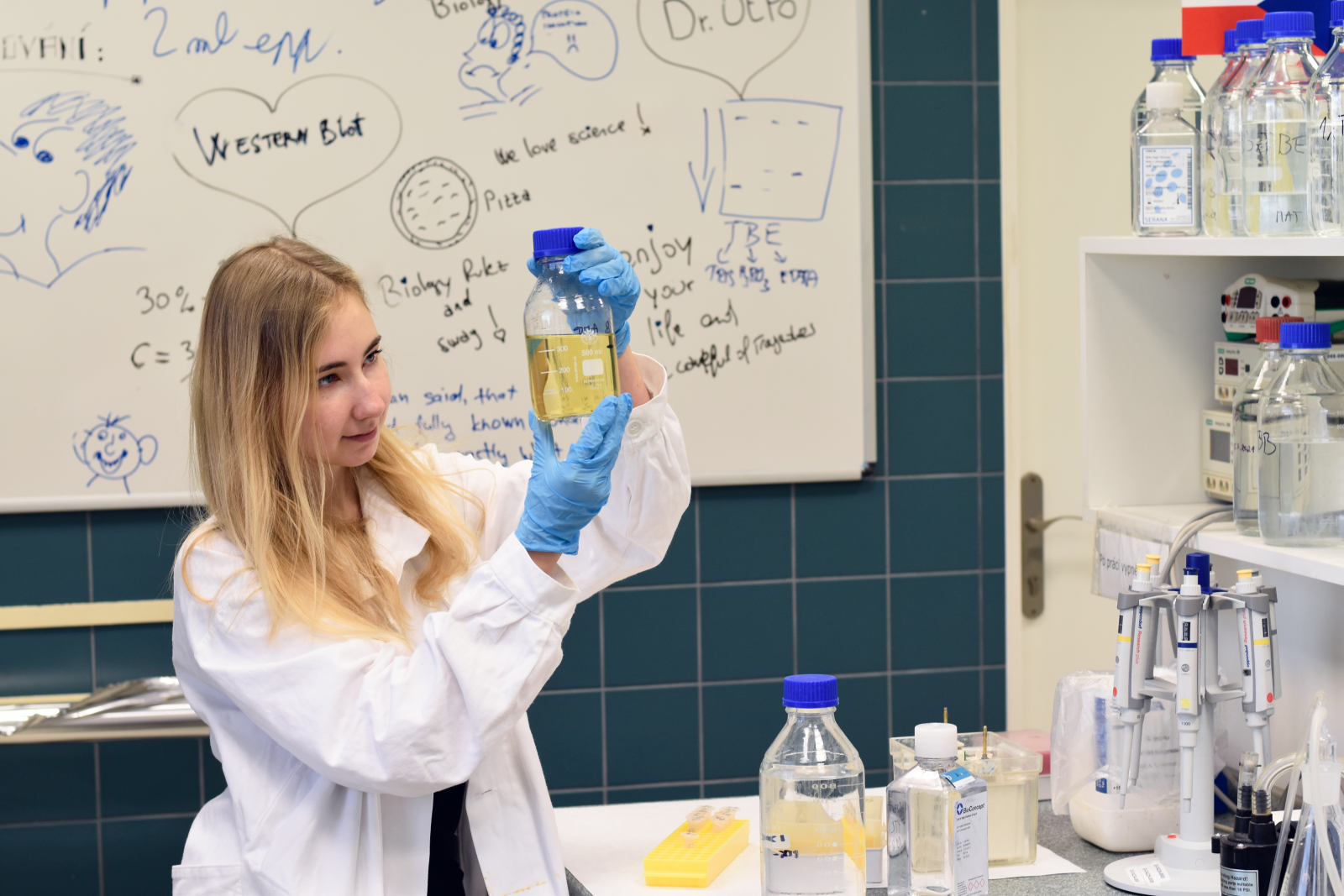
Back in high school, chemistry was not her strongest subject, and she learned chemical nomenclature only because of the final exams. However, during her bachelor's degree she published her first scientific article in the prestigious journal Nucleic Acids Research, and a few years later Michaela Dobrovolná received the highest Czech scientific award Czech Head (Česká hlava), which recognizes the work of successful Czech scientists. The doctoral student from the Faculty of Chemistry BUT studies gene structures that play an important role in biological processes related to viral infections and cancer tumors, and in the future may significantly contribute to the development of new treatment methods.
Although chemistry wasn’t originally her favorite subject, she chose to study Chemistry for Medical Applications as a middle path connecting chemistry with physics and biology. “The first year was demanding. But over time we started learning more specific and interesting topics and chemistry really became enjoyable for me,” she recalls. She was also fascinated by genetics, so she decided to combine her multidisciplinary interests in her bachelor's thesis. “The only person at the faculty connected to genetics was Professor Václav Brázda, so he was clearly the right supervisor. Together we selected a bioinformatics topic, which eventually evolved into my entire research,” she adds.
DNA without rules
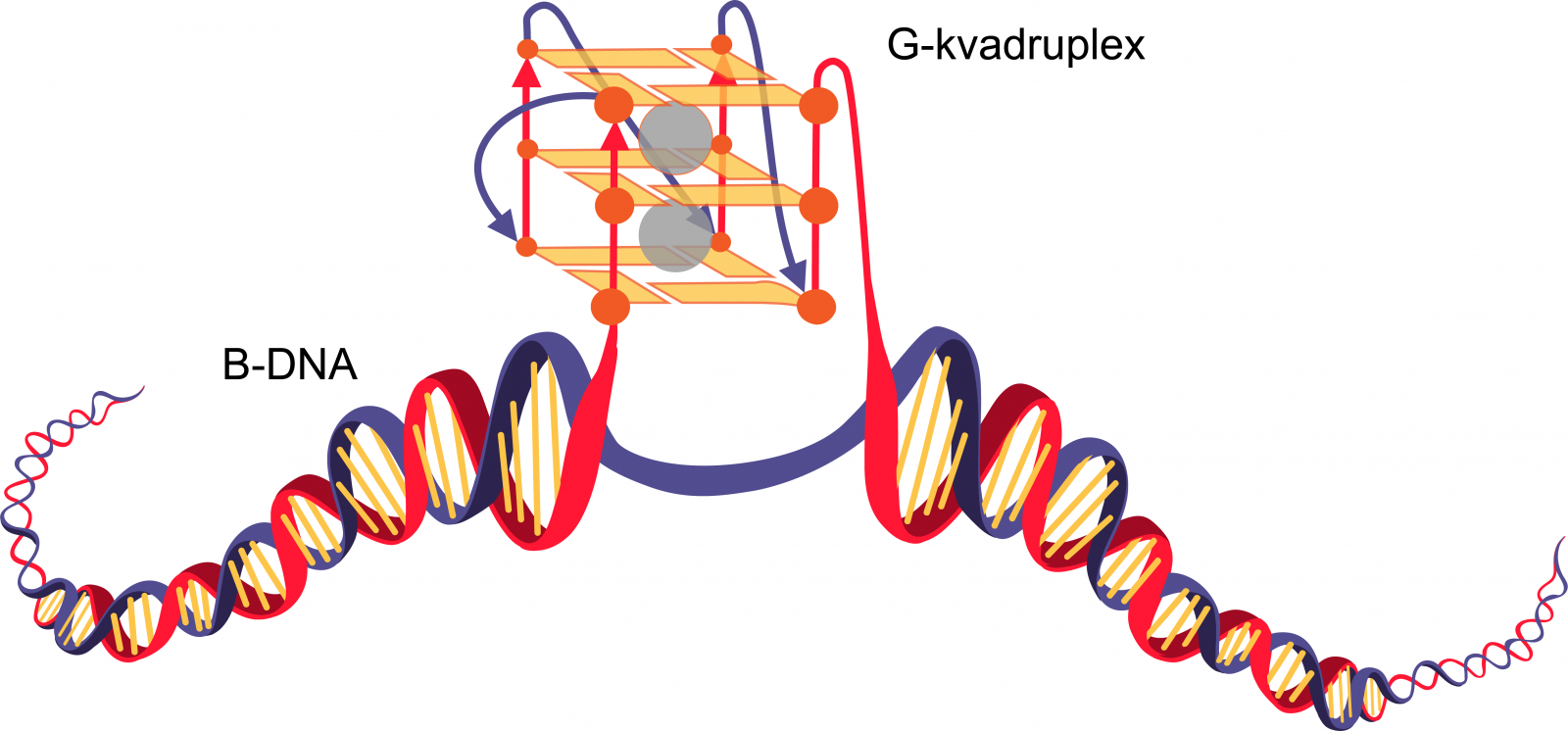
In her research, Michaela Dobrovolná focuses mainly on noncanonical DNA structures, meaning structures that arise under specific biological conditions and differ from the classic genetic arrangement. “When people hear ‘DNA’, they imagine the traditional double helix made of two strands. It could be said that a noncanonical DNA structure ‘misbehaves’, changing the shape of the traditional helix, sometimes forming loops or emerging only on a single strand,” she explains, adding that she most frequently studies G-quadruplexes – structures composed solely of one nucleic acid base, guanine, pairing with itself. These represent a kind of biological deviation where the chain does not pair different nucleotides, but instead links only one type, forming small knots on the helix and altering its structure.
According to the young scientist, these deviations are examined because they might reveal a key biological role in the future. “Since these structures are not standard, they may interfere with or support processes such as replication, transcription, and translation,” she says.
Today, these structures are studied in nanotechnology as well as medicine, as they exist in crucial regulatory regions and may influence gene activation, genomic stability, and the development of certain diseases. G-quadruplexes may help slow virus replication or serve as molecular carriers, and their destabilization may affect tumor growth. “Because they are frequently found in oncogene promoters, it is being discussed whether these structures could serve as a lock for molecule binding, allowing DNA transcription,” adds Dobrovolná. However, the research is still at an early stage and cannot yet be applied to clinical practice.
You can’t know everything
The work of a successful doctoral student includes not only molecular modeling and laboratory verification but also extensive bioinformatic analysis of genetic databases, through which Michaela Dobrovolná discovers the occurrence of anomalous structures, their stability, and the effects of various mutations. “The hardest part was learning the basics of informatics to work correctly with the databases,” she laughs. From experimental methods, she mainly uses fluorescent probes, spectroscopy, and nuclear magnetic resonance. She hopes to continue using these methods in her upcoming research, testing the effects of porphyrin compound binding, molecules that are part of hemoglobin, on G-quadruplexes and cancer cells.
Dobrovolná would like to remain in the research field even after completing her PhD. Whether she will stay in the Czech Republic or continue abroad remains unclear. For her, the key factor is not the location, but rather the topic, its potential, and the attitude of future colleagues. “I’m definitely open to internships. Thanks to Professor Brázda, I’ve already worked in several international labs, so I’m open to opportunities to learn new methods and broaden my horizons,” she says with a smile.
She most appreciates her supervisor’s ability to connect people across disciplines. “I see how important it is to build contacts. You cannot know or do everything yourself, and that’s why it’s valuable to know colleagues who can help fill gaps and push your research further,” she says.
Phishing or reality?
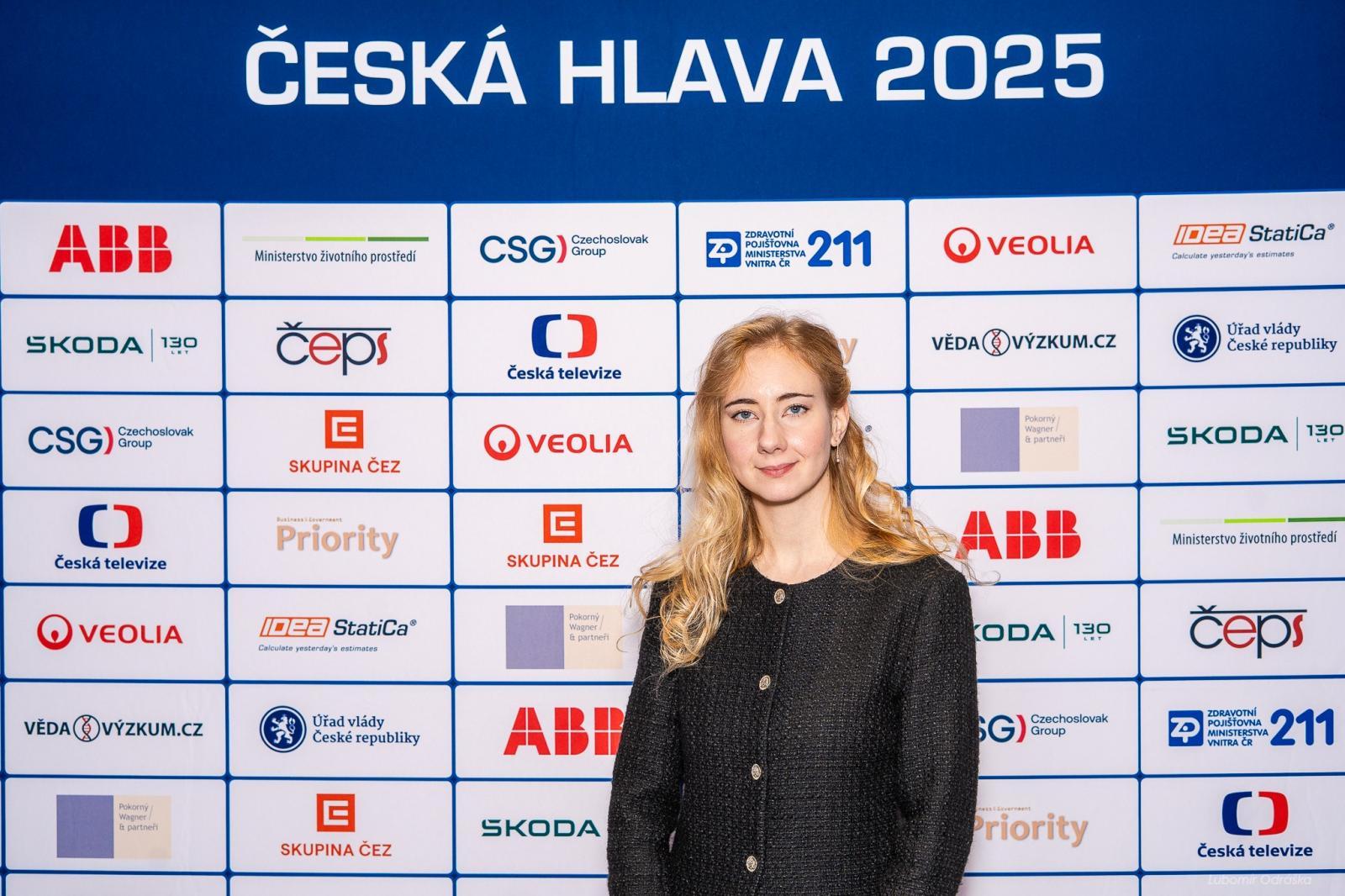
When Michaela Dobrovolná received the message informing her she had been awarded Česká hlava, she didn’t believe it at first. “It’s unusual for such an important award to go to young scientists like me. The email also had the wrong date and greeting, so I assumed it was phishing rather than an official announcement,” she laughs. She is, of course, thrilled with this major milestone in her scientific career and sees it as motivation and an opportunity that may open doors to new projects and collaborations. She also emphasizes that it is a team success, not just her own achievement.
To balance her intense work in the lab and at the computer, the young scientist makes sure to rest. Although it’s difficult for her to walk away from unfinished work, she realizes the importance of taking breaks. On weekends, she leaves her work laptop at the office and disconnects. When she is not in the lab, she is likely traveling, visiting museums, or doing ceramics. “Creating something is great relaxation,” she says, joking that she occasionally uses the same improvisation in the lab as she does while making pottery.
And what would she do if she wasn’t a scientist? “I’d probably work with plants. I would love cultivating houseplants. Although that’s kind of still science, isn’t it?” she laughs. She adds that although her first year at university was challenging, she does not regret her research path in chemistry and encourages all young scientists to follow what excites them and not give up.
Author: Lenka Hubáčková
Source: zVUT.cz
| Published | |
|---|---|
| Link | https://www.fch.vut.cz/en/faculty/for-media/f96620/d311285 |