“Baking is all about chemistry.” Doctoral student Olga Stoklásková is developing protein-rich baked goods that taste great and support better health
Doctoral student Olga Stoklásková from the Faculty of Chemistry at BUT focuses on food chemistry – a field that connects science, the senses and everyday life. Her surname may evoke the world of baking, but Olga has taken it to a scientific level. In her research, she develops high-protein baked goods from local plant-based ingredients, aiming to make them more nutritious, tastier and accessible to ordinary consumers – including those with gluten intolerance. In this interview, she explains what led her to the field, how her work relates to the circular economy, and why she prefers to escape the kitchen at Christmas.

What brought you to study food chemistry?
When I was a child, I used to help with cooking at home. At the beginning of my teenage years, I developed an allergy to store-bought cakes and pastries, so I started baking sweets myself and inventing my own recipes. At school, chemistry felt like the lesser evil – yet it was still a natural science that explains the processes around us. My mum mentioned that I could study something like food chemistry here in Brno. I was thrilled such a programme existed. I knew immediately it was the right fit for me.
How would you explain to a layperson what food chemistry deals with?
Food chemistry explains the processes taking place in foods. It is closely connected to nutrition and food safety. For example, it describes how individual components in foods change during processing and storage, what creates their texture, aroma and taste. It connects science with the senses – it explains the chemical reactions that make food an experience, but also how to ensure its quality, shelf life and safety.
Where do graduates of food chemistry typically find employment?
Food chemists most often work in companies where they participate in product development and industrial food production technologies. They can also detect adulterated foods on the market – an important issue not only in terms of quality but also food intolerances. It is essential that a product labelled “gluten-free” or “lactose-free” truly contains no trace of the allergen.
Interestingly, the problem is not limited to large chains. They have their own specific risks (for example, transporting meat across half of Europe and a refrigeration fault). Small producers may also face issues – for instance, farm sheep cheeses often undergo less rigorous control, and in Slovakia, poisonings or listeria overgrowth in sheep cheese are not uncommon.

My goal is to develop baking mixes enriched with protein. I strive to bake tasty high-protein pastry that could be introduced to the market. Added proteins are often noticeable in baked goods – the products tend to be dense, bitter, rubbery and have off-flavours. Moreover, in the Czech Republic, soy protein is almost exclusively used for enrichment.
I am testing other locally available sources – such as pea, sunflower or wheat-bran protein. My aim is to understand the interactions of all ingredients in high-protein baked goods and the “chemistry of baking” so that I can create more nutritious and healthier products that people will enjoy just as much as, or even more than, traditional ones.
How does your research contribute to improving the quality and nutritional value of food?
Light cereal products made from white wheat flour, which we are accustomed to, are very low in nutrients. They contain a lot of gluten, making them unsuitable for coeliacs, and they have a high glycaemic index – meaning they raise blood sugar levels. Protein ingredients, on the other hand, can lower the glycaemic index of bread and often enrich it with fibre and micronutrients. We can therefore develop bakery products with added value, even if they still contain gluten.
According to current statistics, some form of gluten intolerance affects almost 9% of people worldwide. It is important for these individuals to have access to quality products rather than only starchy substitutes with low nutritional value that are often overpriced.
Where can the results of your research be applied in practice?
Some people see high-protein foods as just another “temporary nutrition trend”. But the fact is that everyone needs protein – for strong immunity, proper recovery, hormonal balance and the feeling of satiety after a meal. Adequate protein intake can even help prevent the development of type 2 diabetes, and the need for it increases especially with age. Yet seniors statistically consume the least protein.
I believe the idea of high-protein baked goods is beneficial also because animal sources of protein are becoming significantly more expensive. I work almost exclusively with plant-based protein sources, which are much more affordable. I would like to develop a completely new technology that could be commercialised and used to produce affordable foods with added value. So that they become realistically accessible to ordinary consumers.
Are you already collaborating with industry partners?
I am building on the research of colleagues – Associate Professor Diviš, Dr Pořízka and Dr Slavíková – who worked on the TA ČR TREND project. It resulted in a technology for isolating proteins from wheat bran and was carried out in collaboration with Mlýny Voženílek.
My goal is to integrate wheat-bran protein back into baked goods. The idea is that the mill, which has bran left over after producing flour, uses it to make protein. I am developing the technology for adding this protein back into bread. This way, we close the loop of the cereal grain and contribute to the circular economy. Our motivation is to support local production and valorise everything that can be obtained from the commodity.

Bakery technology allows the use of a very broad range of methods. Even during kneading, we can measure the dough using a farinograph or rheometer and obtain data on its structural and viscoelastic properties. If the product is leavened, we can monitor the microbial composition of the starter, dough volume and chemical composition during fermentation – for this I use liquid chromatography, for example. For aroma, we would use gas chromatography.
After baking, we can measure texture using devices called texturometers and photograph the structure with an electron microscope to observe porosity in great detail. A texturometer gives us values such as crispness, hardness or elasticity of the crumb. Sensory analysis is an integral part of any food research – evaluators assess appearance, aroma and taste. And finally, we always examine the nutritional value: macro- and micronutrients, digestibility and other parameters.
What result are you most proud of so far?
In terms of developing baking mixes, I felt proud during the sensory analysis of gluten-free breads for my master’s thesis. I had spent about a year and a half developing the basic gluten-free mix I used, working on it at home. The evaluators highly appreciated it – especially coeliacs, who are used to the commonly sold gluten-free bakery products.
I was also very happy to see my results applied in practice: the outcomes of my bachelor’s thesis were published in a German baking magazine, by the very person whose recipes I used to learn how to bake my first sourdough breads at the age of sixteen. Later, I had the chance to present my master’s thesis at a nutrition conference at the medical faculty.
Does chemistry help you when baking at home? Do you have any tricks?
From my perspective, baking is all about chemistry. Whether I’m thinking about whether to let the dough rise by the radiator or in the hallway, how much liquid to add to an almond-flour cake, or what temperature to bake a chocolate tart at – everywhere, I apply knowledge from chemistry, biology and physics.
If I want an elastic and stretchy dough for bread, I must first combine the liquid with wheat flour and only then incorporate air. Otherwise, I would glue the flour particles together and the dough would lose elasticity and crumble. On the contrary, with cookies, the butter needs to be mixed with the flour right from the start so they become crispy and crumbly. For fruit crumble topping, I know it’s better to use coarse flour – fine flour would absorb the juice and become mushy instead of forming a crunchy crust.
During baking, a huge number of reactions occur. In yeast doughs, shortly after placing them in the oven, the surface begins to dry, sugars caramelise and colour the crust, and carbohydrates and proteins break down and react with each other. A variety of coloured and aromatic compounds form, giving baked goods their characteristic flavour. Inside the cake, the leavening continues for a short while, then the yeast dies, proteins set and create structure, and starch gelatinises, giving the crumb its softness.
What do your ideal Christmas holidays look like – from the perspective of a chemist and baking enthusiast?
I am both a chemist and a baking enthusiast, but precisely because of that, my whole life has practically moved into the kitchen. Although I absolutely love it, at Christmas I want to escape the kitchen and take a break from cooking. That’s why, for the second year in a row, I’m heading to mountain spa resorts in Austria with top-class gastronomy, where I can enjoy food served “right to my table” and relax in peace and nature. For me, it is a wonderful way to recharge – not only for baking inspiration.
What would you recommend to people who want to bake healthier at Christmas but don’t want to lose the traditional flavour?
Czech Christmas recipes can be adjusted quite well. You can replace part of the white wheat flour in cookies with nut flours – almond or walnut. Cow butter can be partly substituted with peanut butter or cashew butter, which is more neutral in flavour.
I recommend replacing 10–15% of the flour with whey protein or peanut protein. Peanuts are not too noticeable in protein form, so the dough won’t be ruined and will gain nutritional value. Whey proteins are often sold with vanilla flavouring and sweetened with stevia – this allows you to reduce the amount of sugar.
Another option is to play with spices – more cinnamon, cocoa or real vanilla. The flavours will deepen and the cookies will taste more complex, even if they are less sweet. And a practical tip: from a single vanilla bean you can make over half a kilo of homemade vanilla sugar using a grinder. It is many times cheaper than store-bought.
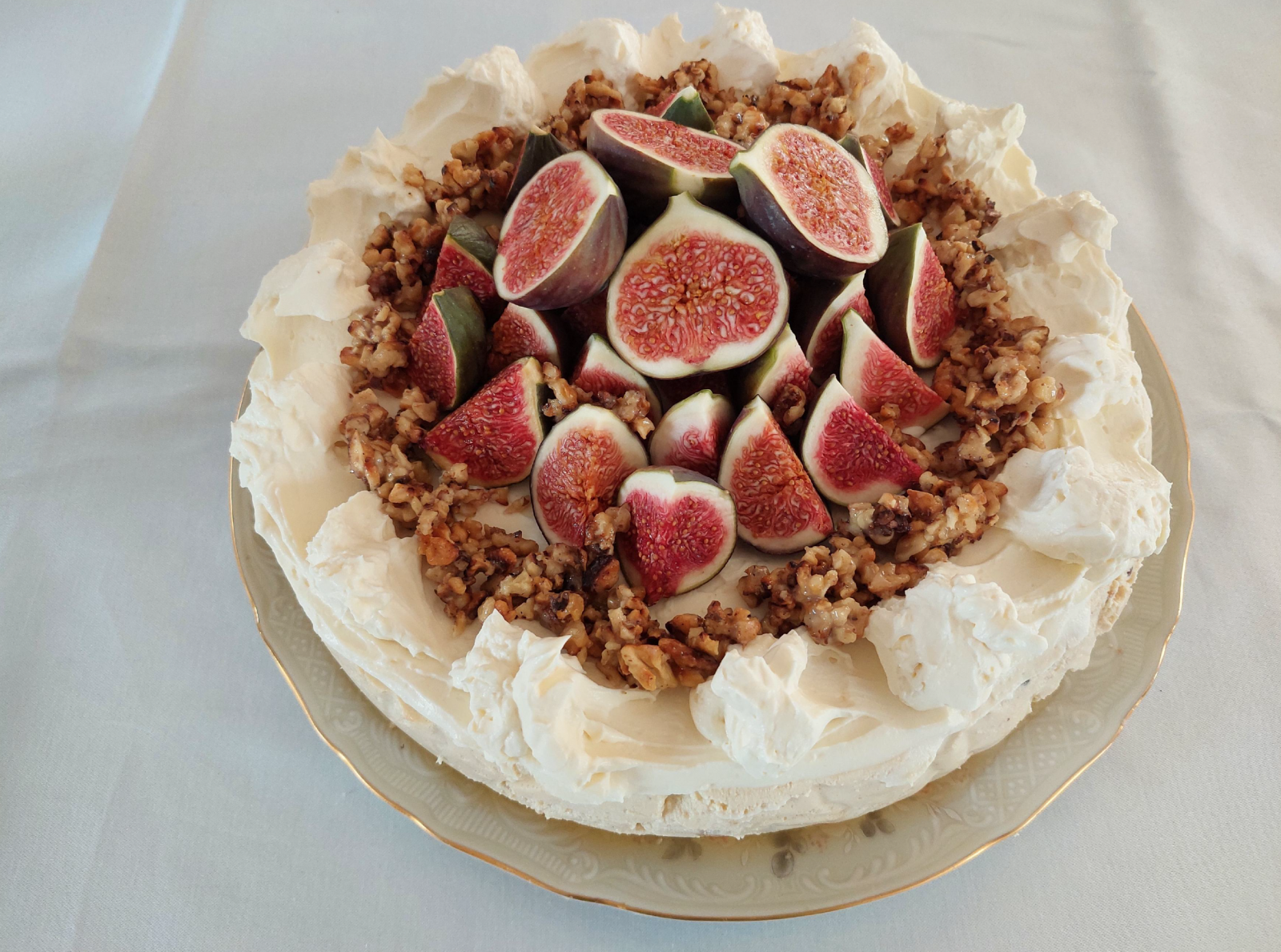
The most important factor is quality – both of ingredients and of methods. Margarine with “butter flavouring” will never give pastry the same qualities as real butter. If you want a good chocolate cake, do not use cheap cooking chocolate substitutes.
In my view, the foundation of healthy eating lies in dark sourdough bread, curd cheese and sauerkraut. But people often do not have the time for fermentation, and traditional curd does not appeal to everyone. This is also why, as a food chemist, I am developing protein-enriched sourdough products that you can grab on the go and which offer comparable nutritional benefits.
What advice would you give students considering studying food chemistry?
Definitely go for it if it fascinates you. It is a field that will always be relevant – there will always be more to explore. The discipline encompasses so many areas that everyone can find their place. And you also have the chance to work on something that impacts the everyday lives of all people – because we all need to eat.
Thank you for the interview and we wish you much success in the future!
-jo-


| Published | |
|---|---|
| Link | https://www.fch.vut.cz/en//f96620/d310185 |